
Once you’ve invested your hard-earned money into a piece of furniture, you want to make sure it retains its beauty and quality. This includes knowing the best practices for cleaning fresh stains as well as longer-term discoloration. While there are some tried and true methods for cleaning your sofa at home, we share what works best on different materials. But first, here are some common questions we get about products used to clean sofa stains.
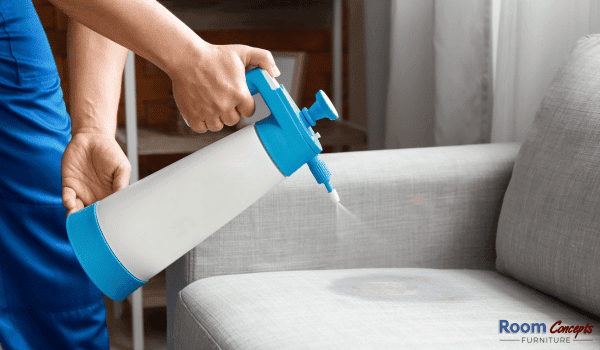
Does Vinegar Remove Couch Stains?
Vinegar can remove stains from sofas when appropriately diluted with water. However, it must be used with care on certain sofa materials, such as leather. Make sure to reference your furniture’s care tags before using vinegar, water, or any other substance to clean it.
Do Water and Baking Soda Remove Couch Stains?
A baking soda and water mixture is a common at-home solution used for removing sofa stains and odors. But just like with vinegar, it is not recommended for use on certain sofa materials, like leather, and should generally be approached with caution in any furniture application. We cover how to clean sofa stains with baking soda in more detail in the next section.
How to Clean Sofa Stains on Different Types of Materials
Before you use any cleaning materials on your sofa, you’ll want to check for the manufacturer’s care tag. These are usually located under one of the cushions and should give directions on how to clean your sofa safely.
What Do Sofa Care Tag Labels Mean?
The care tag will be labeled with one or two letters: W, S, WS, X.
- “W” means only water based cleaners should be used to clean your sofa.
- “S” means do not use water based cleaners containing isopropyl (rubbing alcohol) or similar. Instead, you’ll need to buy a water-free, solvent-based cleanser. Look for products labeled for upholstery dry cleaning.
- “WS” is the most flexible designation and means either water or a solvent-based cleanser may be used to clean your sofa.
- “X” means you can only vacuum your sofa. You may use a soft bristle attachment for more precision, but professional upholstery cleaning should be used for deeper cleans.
If your sofa is older and you can no longer find a care tag on it, first evaluate which type of fabric your sofa is made of and then follow the appropriate directions for that type of fabric below.
**Disclaimer: While these are all proven options to remove stains, you will still need to follow the manufacturers recommendations on cleaning in order to ensure proper care of your furniture according to those guidelines.
How to Clean Fabric Sofas and Furniture
To make your own stain remover for fabric sofas that are W-approved, combine 1 teaspoon dishwashing soap, 1 tablespoon white vinegar, and 1 cup of warm water in a spray bottle. Then add 1 teaspoon of baking soda and quickly close up the bottle (or else you’ll have bubbles everywhere!). You can use this mixture to spot clean stains by spraying the sofa cleaner solution onto a towel and gently dabbing and rubbing the fabric or by using the towel to wipe down the whole sofa for an all over clean.
How to Clean Microfiber Sofas and Furniture
Rubbing alcohol is the key ingredient when treating stains on a microfiber sofa (typically S-approved). But you’ll want to work in sections because rubbing alcohol dries quickly. Spray an area of your sofa with isopropyl alcohol (rubbing alcohol) and then immediately scrub it with a white or light-colored sponge or microfiber cloth. It’s important that any scrubbing tool be light in color; otherwise, the color of the sponge/towel will transfer to the sofa and you’ll have another stain to work out!
Once your sofa is dry, use a dry soft-bristle brush in a circular motion to fluff the fabric to regain its softness.
How to Clean Leather Sofas and Furniture
Figuring out how to clean sofa stains when your couch is leather can be a bit tricky because of the different finishes available. The most common type of leather used for couches is protected leather, and this is the type of leather we’ll focus on today.
Genuine leather furniture must be handled with more care than fabric furniture. It is generally best practice to discuss maintenance with your manufacturer or the store where you bought your leather furniture before presuming upon any particular methods for cleaning it.
Most stains on leather furniture can be cleaned with soap and water. Create a water-based cleaning solution by mixing equal parts water and white vinegar or a mild detergent. Dip a clean microfiber cloth into the solution to dampen it. Wipe the sofa with the damp cloth, rinsing the cloth often. Dry the sofa afterward with a microfiber cloth.
It is generally recommended to avoid baking soda or rubbing alcohol on leather since both these substances can strip the leather of its natural oils, leading it to dry out, crack, and discolor. If stains will not come out with water-based at-home solutions, consult a professional.
What Stains Cannot Be Removed from Furniture Upholstery?
No matter how much you try, there are some stains that will require some additional elbow grease to neutralize. Some of the hardest stains to remove include water marks, chocolate, bodily fluids, tomato sauce, and red wine.
1. Water Marks
This one may surprise you; after all, “it’s just water!” But water stains can be brutal to furniture, especially in the long term if they are not dealt with when they occur.
If water stains are frequently happening on the couch due to flooding, a leaking air conditioner, toppled water bottles, or any other source, you can take preventative measures to try and minimize the damage by drying, dry the water as quickly as possible using towels, fans, or opening the windows.
Unfortunately, water stains become the most problematic when they form over time as water is frequently spilled in an area and left to the air instead of drying right away. Unfortunately, these types of long-term stains are typically the most challenging to get out.
How to remove water stains from your sofa
To tackle a long-embedded water stain, try blotting the area with a clean, damp cloth dipped in a mixture of warm water and mild detergent (first check that it is safe for your sofa’s material). Continue blotting the area until the stain can no longer be lightened or removed. Immediately dry the area with a fan or hair dryer on the cool setting.
2. Chocolate
You may use chocolate to cure your stress, but if it gets on your sofa, all it will do is cause you stress. The color of chocolate makes it easy to stain lighter-colored fabric, and because it’s a mixture of protein, fat, and sugar, it can’t always be removed using water.
How to remove chocolate stains from your sofa
You can attempt to remove a chocolate stain from your upholstery by using a stain detergent (if it’s safe for your sofa fabric) and then washing the area with the appropriate sofa cleaner solution.
If you cannot find an adequate detergent for your sofa type, but it is water-approved, you may want to try blotting with a mixture of cool water and dish soap. Once the area is cleansed, blot away most of the moisture with a dry towel and leave the rest to air dry.
3. Bodily Fluids
Whether you have kids or not, there’s a good chance your sofa will come into contact with bodily fluids at some point, such as blood.
How to remove blood stains from your sofa
To clean blood stains, immediately blot out the fresh blood with a clean cloth, cold water (if your fabric allows), and a small amount of dish soap. Just like with chocolate, never use hot water as it will set the stain. Depending on the severity of the stain, this may be sufficient, but if it persists, follow with an approved upholstery cleaner for your couch.
For dried blood stains, start by scraping off excess (using a soft-bristle brush or old toothbrush) before adding cold water, but more serious measures may be necessary. If safe for the fabric of your sofa, use a stain remover that is enzyme-based or use baking soda to help remove the stain. It is best to always test upholstery cleaners on a hidden area of the sofa before applying them to a stain.
4. Tomato Sauce
Almost all of us have fallen victim to tomato sauce staining our shirt, which is so difficult to remove because of the oil and grease in the sauce.
How to remove tomato sauce stains from your sofa
While you’re supposed to immediately soak a tomato sauce stain in cool water, this isn’t really an option with a stain on your sofa. Instead, first gently attempt to remove as much of the excess sauce as you can without rubbing it further into the fabric; then, follow by dabbing the area with a clean cloth and cool water (if your sofa fabric is water-safe). Finally, spot-treat the stain with a mixture of cool water and a tablespoon of white vinegar. Alternatively, you could mix the cool water with a half-tablespoon of a mild dish detergent. Wipe with water, blot away some of the excess moisture with a rag, and allow to dry fully.
5. Red Wine
Red wine is a troublesome stain when the spill isn’t cleaned up immediately.
How to remove red wine stains from your sofa
With a red wine spill, you want to dab as much of the excess liquid up as possible without rubbing. If you have some white wine on hand, this may be used to dilute the red in the stain, although it will likely not remove the stain completely.
You may also try applying a paste made of baking soda and water and letting it dry overnight. Vacuum the sofa thoroughly the next day.
When Is It Time for a New Sofa?
If your sofa carries long-term stains from any or multiple of these hard-to-remove (and yes, sometimes impossible) sources, it might just be time to consider getting a sofa cover, or go sofa shopping again depending on how bad the stains are. If your kids are still young or you have pets or accident-prone loved ones, you may want to consider a leather or fabric sofa. While both are popular materials for a sofa, you’ll want to compare leather vs fabric to decide which material is best for your home. Room Concepts offers customizable sectionals and customizable sofa options in both leather and fabric.
Room Concepts provides high quality, customizable living room furniture to fit your lifestyle and space, with many configurable options and customized designs to meet your needs. Our Furniture Design experts are happy to help you create the perfect piece to add value and comfort to your home. Get in touch with our team today or stop into one of our Pittsburgh area showrooms in Whitehall or Wexford, PA.


